Are you looking for an AI solution for your customer service, but feel like you have to choose between being locked into an ecosystem or starting from scratch? 🤔
Intercom launched Fin. HubSpot integrated Breeze. Zendesk pushed its native AI. On paper, everyone promises the same thing: automation, faster responses, and reduced costs.
In reality? Many support teams remain disappointed.
Why? Because these solutions are designed to keep you captive to a tool, not to make you more efficient.
In this guide, we explain:
Spoiler alert: the future of AI customer service is neither fully automated nor confined to a single tool.
Let's go! 🚀
A "closed" AI is an artificial intelligence solution that operates solely (or primarily) within a proprietary ecosystem.
In plain English? If you use Intercom Fin, you must be on Intercom. If you want Zendesk AI, you must be on Zendesk. Makes sense, right?
Except that this logic has consequences:
Unlike closed AI, CRM-agnostic AI adapts to your existing stack. You keep your tools, your habits, and your workflows. The AI is added on top of them, not the other way around.
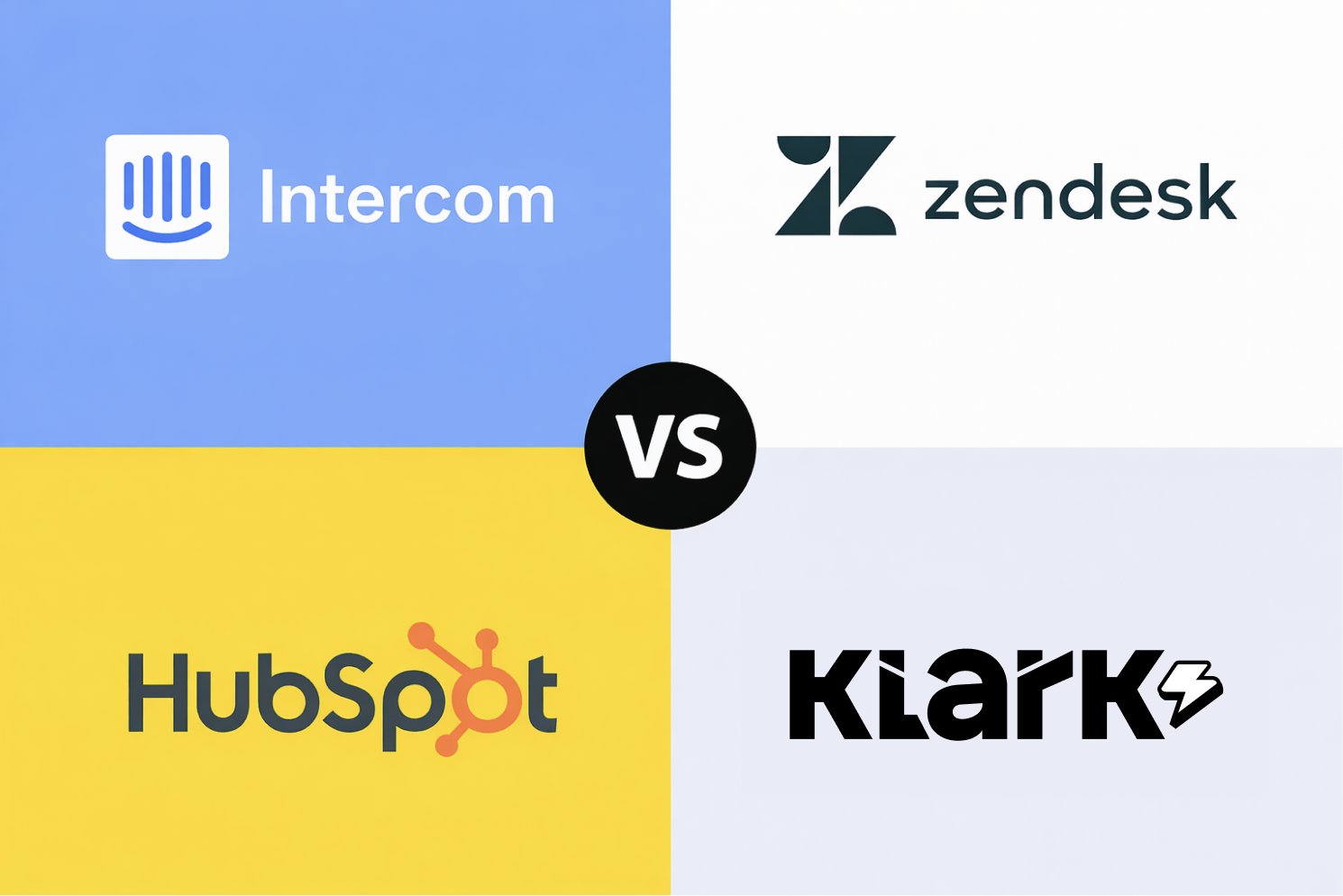
🔒 Closed AI (Fin, Zendesk AI, HubSpot AI)
🔓 AI CRM-agnostic (Klark)
❌ With closed AI: You ask your agents to change tools, get trained, and adapt. What if the AI isn't suitable? You're back to square one.
✅ With CRM-agnostic AI: Your agents keep their usual tools. The AI integrates into their existing workflow. No friction.
Can you see the difference?
The numbers don't lie. And neither do user reviews.
📈 On G2 and Capterra, users regularly mention implementation delays of several weeks with Zendesk.
💰 Intercom charges €0.99 per resolution. Do the math: 1,000 resolutions/month = €990. And that number quickly increases as you scale up.
😐 Users complain that Fin continues to respond even when a human agent has taken over the conversation. The result: confusion on the customer's side.
⚡ Zendesk AI requires add-ons that can cost $50+ per agent per month, in addition to the basic subscription.
The problem is not that these tools are bad. They perform well within their ecosystem. The problem is that they lock you into that ecosystem.
And when you want to get out? Good luck.
Let's break down how a solution like Klark works.
No need for complex APIs or six-month integration projects. The Chrome extension plugs directly into your current CRM interface.
Whether you use Zendesk, Intercom, HubSpot, Freshdesk, Gorgias, or Front, Klark works. Even on less common tools.
AI doesn't just read the incoming message. It analyzes it:
Result: relevant suggestions, not generic answers.
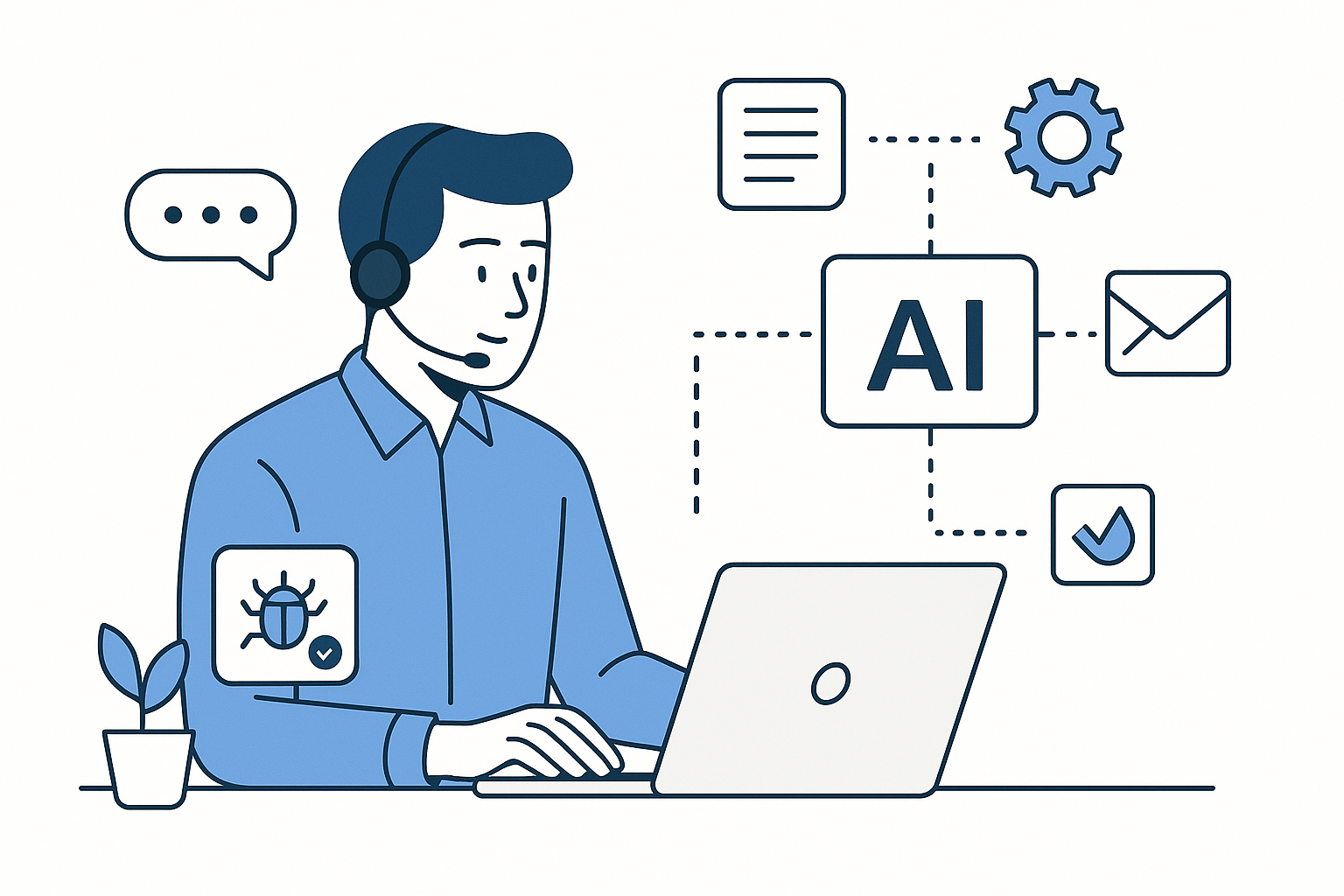
The agent remains the decision-maker. AI suggests, structures, and accelerates. But it is the human who validates and sends.
This is the "co-pilot" philosophy: AI saves time, it does not take control.
Klark has been LLM-agnostic since day one. Specifically:
You always get the best of AI, without being tied to a single vendor.
Intercom Fin is a powerful AI bot. Let's face it. But it has its limitations.
1. Resolution-based pricing
$0.99 per resolution may not seem like much. But calculate the cost over a year for a team that handles 5,000 tickets per month. Costs skyrocket when you scale up.
At Klark, the pricing model is designed so that you only pay for what really helps your teams, with no unpleasant surprises as you automate.
2. Confinement Intercom
Fin works "with any helpdesk" according to their website. In practice? It is optimized for Intercom. Other integrations are additions, not priorities.
3. The bot that won't let go
Several users report that Fin continues to respond even after an agent has taken over. Confusion guaranteed on the customer side.
With Klark Copilot, the agent remains in control. The AI assists, but never takes control of the conversation.
4. The complexity of setup
Intercom is powerful but complex. Users report spending weeks configuring it to optimize workflows.
Klark? Deploy in minutes. No complex configuration.
Zendesk is the long-standing leader in helpdesk software. Its native AI is powerful. But it comes at a cost.
1. Complexity and implementation time
User feedback on G2 and Capterra regularly mentions delays of four weeks or more. For an SME or scale-up, that's huge.
Klark deploys in hours, not weeks.
2. Accumulating costs
The basic subscription (€55-115/agent/month) does not include advanced AI features. Expect to pay an additional €50+ per agent for true automation capabilities.
3. Generic AI
Zendesk AI is designed for all use cases. That is both its strength and its weakness. It is not specialized in B2B customer service like Klark.
4. Historical lock-in
Once you're on Zendesk, it's hard to leave. Your data, your workflows, your integrations: everything is connected.
With Klark, you can keep Zendesk if you like it. Or you can switch without losing your AI.
HubSpot has launched Breeze, its AI suite. The customer service agent promises to automatically respond to simple tickets.
1. The closed ecosystem
HubSpot is primarily a marketing and sales tool. Service Hub came later. AI is designed for the entire platform, not specifically for support.
2. Limits on complex cases
User feedback mentions difficulties with technical tickets or nuanced requests. AI is effective for FAQs, but less so for everything else.
3. Limited customization
It's difficult to customize responses beyond the templates provided. For a brand with a specific tone, this is frustrating.
Klark adapts to your tone, your policies, and your communication style.
4. The tariff jump
The transition from Starter to Pro at HubSpot is abrupt. Many users find themselves paying for features they don't use.
Why do support teams choose this approach? Here are the concrete benefits.
Changing CRM systems? Klark will follow you. No migration, no loss of training data, no going back to square one.
Result: Your AI strategy is independent of your technical stack.
No three-month integration project. The Chrome extension installs in minutes. Your agents are up and running the same day.
At Klark, our customers are deployed in 2-4 hours, not 4-12 weeks.
The copilot philosophy changes everything. AI structures, accelerates, and ensures reliability. But the agent decides.
Impact: Better quality responses + valued agents (not replaced).
LLM-agnostic = access to the best models on the market. When GPT-5 comes out, you benefit from it. When Claude improves, you benefit from it.
Result: You are never stuck with outdated technology.
No need to wait six months to see results.
At Klark, our customers see:
Zendesk, Freshdesk, Intercom, Salesforce, Gorgias, Front... and all the others. One solution, all CRMs.
Situation: An e-commerce scale-up uses Zendesk for support and HubSpot for sales CRM. Both teams require AI.
With closed AI: Two different solutions, two training courses, two costs, no synergy.
With Klark: A single AI that works on both tools. Same answers, same quality, one knowledge base.
Result: A completely consistent customer experience, regardless of the channel.
Situation: A company decides to switch from Zendesk to Freshdesk (or vice versa).
With Zendesk AI: You lose everything. The AI, the optimizations, months of work.
With Klark: You change your CRM, Klark follows. The AI continues to function as before.
Result: Smooth migration, no loss of productivity.
Situation: A customer service manager wants AI, but his agents fear being replaced.
With an autonomous bot (such as Fin): The AI takes the tickets, the agents handle the escalations. Tension within the team.
With Klark Copilot: AI assists each agent individually. They work faster, but remain in control of their decisions.
Result: Massive adoption by teams (over 2,000 agents use Klark daily).
Let's be honest. AI in customer service raises legitimate concerns. Let's address them.
False. At least, not with the co-pilot approach.
The goal is not to eliminate jobs, but to free up time. Your agents spend less time on repetitive tasks and more time on value-added interactions.
The result? More satisfied agents and better-served customers.
Not anymore.
Closed solutions can take weeks. But a Chrome extension? Installed in 5 minutes, up and running within an hour.
With solutions like Klark, you'll be up and running before the end of the day.
It depends on the AI.
An AI that only knows your FAQ will give basic answers. An AI that analyzes context, customer history, and your policies gives personalized answers.
That's exactly what we do at Klark. The AI understands the full context before making suggestions.
Not with a CRM-agnostic approach.
It's actually the opposite. You keep your current tools. You add a layer of AI on top. If you ever want to change, the AI follows.
Zero lock-in, by design.
Be careful with models with resolution.
€0.99 per resolution seems like a small amount. But calculate it over a year. Contact us for a simulation tailored to your situation.
Not all tools are created equal. Here are the essential criteria.
✅ CRM compatibility: Does AI work with your current tool? What if you change it?
✅ Philosophy: Autonomous bot or co-pilot? Replacement or assistance?
✅ Deployment time: Days or months? Can your team wait?
✅ Pricing model: Per resolution, per case, flat rate? Predictable or variable?
✅ AI flexibility: Are you stuck with one model, or can you benefit from market advances?
✅ Specialization: Is the tool designed for customer service or is it a general-purpose add-on?
We're just getting started. Here's what's coming.
Neither 100% bot nor 100% human. The future lies in intelligent hybridization: AI manages what it does best, while humans focus on relationships.
Companies are increasingly rejecting lock-in. Solutions that adapt to all stacks will have the advantage.
AI will no longer just respond. It will anticipate, adapt its tone, and personalize each interaction based on the customer profile.
Support teams will become more skilled. Fewer repetitive tasks, more interpersonal and technical expertise.
At Klark, that's exactly the vision we're building. AI that augments agents, not replaces them.
🔌 CRM-agnostic from day one: Chrome extension that works with any tool: Zendesk, Freshdesk, Intercom, Salesforce, Gorgias, Front, and all the others.
🧠 LLM-agnostic: Accessto the best AI models on the market. Dynamic change based on performance. You always get the best.
🤝 Co-pilot philosophy: The agent remains at the center. AI assists, structures, and accelerates. But it is the human who decides and sends.
⚡ Deployment in minutes: Nointegration project. No complex configuration. Operational in 2-4 hours.
📊 Proven results
Let's recap what we've seen:
✅ "Closed" AIs (Intercom Fin, Zendesk AI, HubSpot AI) lock you into an ecosystem.
✅ AI that is CRM-agnostic adapts to your stack, not the other way around
✅ The co-pilot approach is more effective and better accepted than the autonomous bot.
✅ Deployment can be completed in hours, not months
✅ Resolution costs skyrocket when you scale up
✅ LLM flexibility ensures you always get the best out of AI.
Your competitors are already adopting AI for their customer service. The question is no longer "if," but "how."
Want to see how Klark can transform your media?
👉 Request a personalized demo and discover AI that adapts to you, not the other way around.
Because ultimately, the best customer service AI tool is one that makes your agents more efficient AND your customers happier. 🚀
About Klark
Klark is a generative AI platform that helps customer service agents respond faster, more accurately, without changing their tools or habits. Deployable in minutes, Klark is already used by over 50 brands and 2,000 agents.