Generative AI (GenAI) is revolutionizing customer service at lightning speed. And if you're not on board yet, you're already late. 🚀
In this comprehensive guide, we dive deep intogenerative AI for customer service: what it is, how it differs from traditional AI, proven methods that work, real-life examples from successful companies, and best practices for deploying it successfully.
Whether you're in the exploration phase or ready to take action, this guide will give you everything you need to transform your customer service with generative AI. Let's get started!
What is generative AI (GenAI)?
Generative AI refers to AI systems capable of creating new content, text, images, code, and more, rather than simply analyzing existing data or following predefined rules.
Key features :
Create original answers (not pre-written templates)
Understands the context and nuances of natural language
Learns from massive amounts of data
Adapts to different situations and tones
Continuously improves with every interaction
Examples of GenAI models :
GPT (OpenAI)
Claude (Anthropic)
Mistral
Gemini (Google)
At Klark, we use the best GenAI models on the market to power our customer service solutions.
GenAI vs traditional AI: what's the difference?
Traditional AI
Generative AI
Follows rules and scripts
Generate original responses
Limited to predefined scenarios
Handles infinite variations
Keyword comprehension
Deep contextual understanding
Static knowledge base
Dynamic, continuous learning
Robotic responses
Natural, human conversations
Extensive programming required
Works with natural language instructions
Example:
Traditional Chatbot: "To track your order, click here : [link]"
GenAI Assistant: "I can help you track your order! I see you ordered the Blue Widget on March 15. It was shipped yesterday and should arrive tomorrow before 2pm. Would you like me to send you a tracking link or reschedule delivery?"
Can you see the difference? GenAI understands the context, accesses the relevant data, and responds naturally.
Why GenAI is a game-changer for customer service
The impact is massive:
55% of customers consider AI essential for quality customer service
85% of companies have adopted AI by 2025 (vs. 10% in 2023)
90% reduction in processing time for repetitive queries
50-70% increase in productivity for support teams
24/7 availability without increasing headcount
Instant multilingual support without hiring translators
But it's not just about efficiency. GenAI enables large-scale personalization, something that was impossible before.
Key applications of GenAI in customer service
1. Intelligent chatbots and virtual agents
GenAI-powered chatbots understand customer intent, provide accurate answers, and have natural conversations.
What they can do:
Answering complex questions in context
Solving multi-step problems
Personalize responses based on customer history
Manage follow-up questions naturally
Real impact: At Klark, our GenAI chatbots handle 43% of customer requests automatically.
2. AI copilots for support agents
GenAI supports human agents in real time, suggesting answers, finding information and automating tasks.
What co-pilots do:
Suggest complete and accurate answers instantly
Summing up long threads of conversation
Find relevant articles in the knowledge base
Write follow-up emails
Translate conversations in real time
Real impact:Klark Copilot users see 50% productivity gains.
3. Automated email replies
GenAI can read, understand and respond to customer emails with a human quality.
What it does:
Categorize and prioritize emails
Writing personalized responses
Automatically manage routine requests
Escalating complex cases to humans
4. Sentiment analysis and proactive support
GenAI analyzes customer emotions and predicts problems before they escalate.
What it detects:
Frustrated customers (for priority treatment)
At-risk customers (for retention efforts)
Satisfied customers (for upsell opportunities)
Trend problems (for proactive correction)
5. Knowledge base generation and maintenance
GenAI can automatically create and update articles from support conversations.
What it does:
Identify knowledge gaps
Generate draft articles from resolved tickets
Update obsolete information
Suggest content improvements
6. Large-scale multilingual support
GenAI provides instant translation and culturally appropriate answers in dozens of languages.
Real impact: Support your customers globally without recruiting multilingual agents.
How to implement GenAI in customer service (step-by-step)
Step 1: Define your goals
Be specific about what you want to achieve:
Reduce response time by X%?
Manage Y% of requests automatically?
Improving CSAT scores?
Scaling support without increasing headcount?
Step 2: Audit current processes
Identify :
Frequently asked questions
Time-consuming repetitive tasks
Knowledge gaps in your team
Friction points in current workflows
Step 3: Choosing the right GenAI solution
Search for :
Easy integration with your existing tools (Zendesk, Salesforce, etc.)
Quality of AI models (GPT, Claude, etc.)
Security and compliance (RGPD, SOC 2)
Customization to match your brand voice
Proven track record with measurable results
At Klark, we tick all these boxes and deploy in hours, not months.
Step 4: Prepare your knowledge base
GenAI is only as good as its access to good knowledge. Feed it with :
Help Center articles and FAQs
Product documentation
Past support conversations
Internal process guides
Policy documents
Pro tip: Klark automatically extracts knowledge from your past conversations. No manual work required.
Step 5: Build your team
Prepare your human agents:
Explain how GenAI will help them (not replace them)
Training on the effective use of AI suggestions
Teach when to trust AI vs. when to intervene
Celebrate early victories together
Step 6: Gradual deployment
Pilot: Test with a small team or specific use case
Klark is a generative AI platform that helps customer service agents respond faster and more accurately, without changing their tools or habits. Deployable in minutes, Klark is already used by over 50 brands and 2,000 agents.
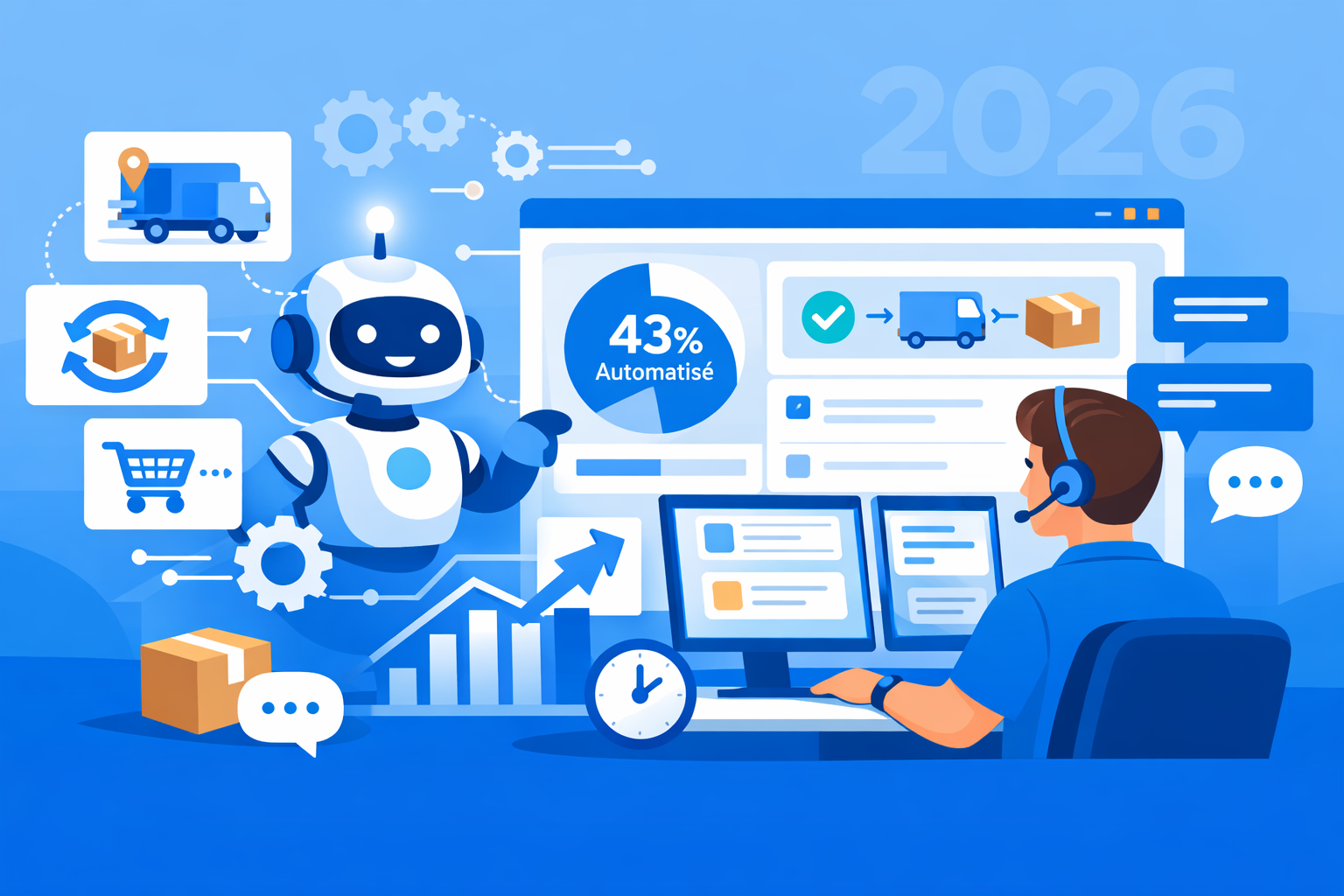
Discover how agentic AI is transforming e-commerce customer service: 43% of tickets automated, peaks in activity absorbed, and ROI in 3-4 months. Comprehensive guide with use cases.
Intercom Fin, Zendesk AI, HubSpot Breeze... Native AI promises to automate support, but often locks teams into a single ecosystem.
This article breaks down the limitations of "closed" AI and shows why a CRM-agnostic, co-pilot approach is more effective, flexible, and cost-effective for customer service.
Discover how RAG (Retrieval-Augmented Generation) is transforming customer support: methods, real-life examples, best practices for delivering accurate, up-to-date answers while eliminating AI hallucinations.
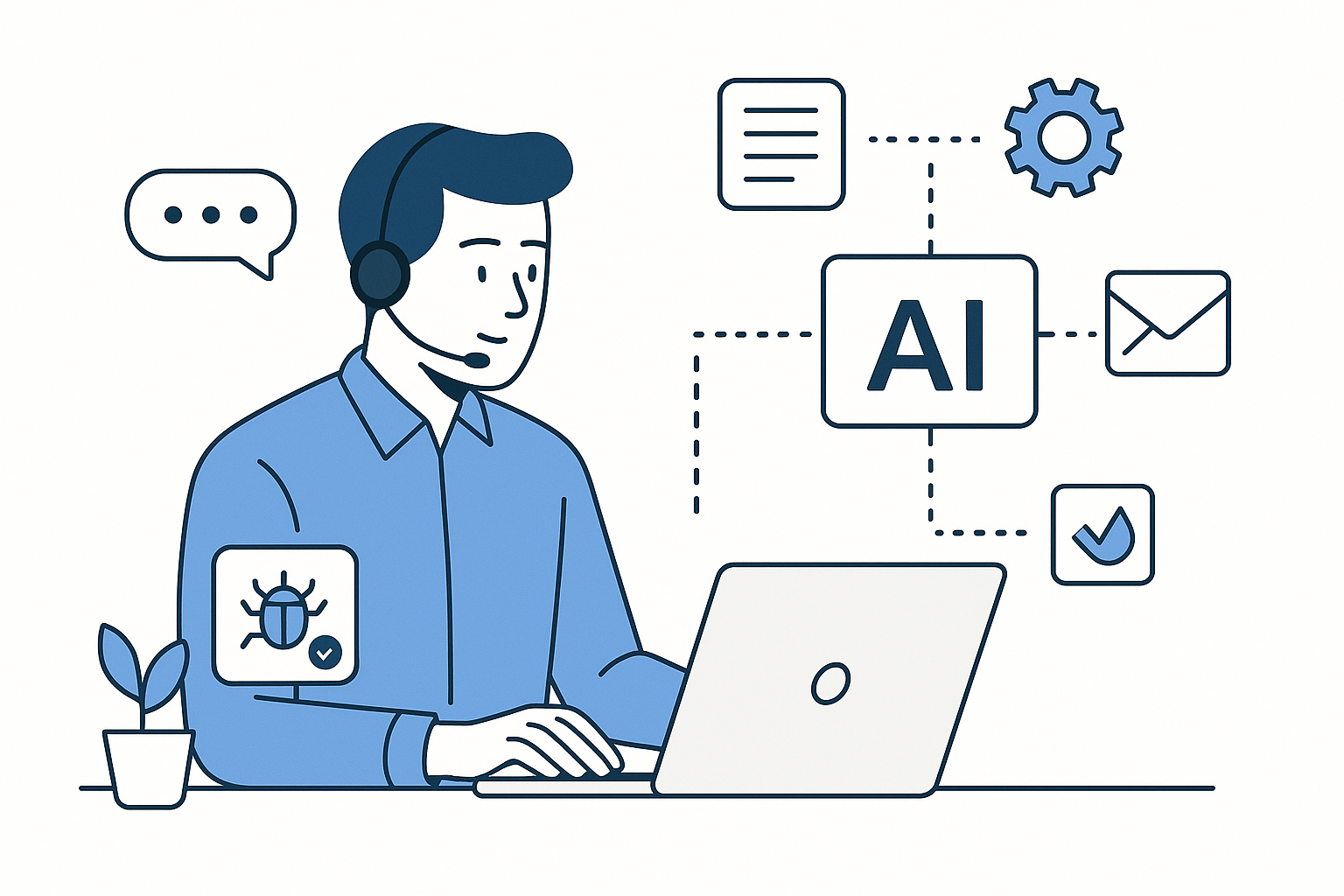
Find out what an AI agent is: a clear definition, how it works, how it differs from chatbots, and how these autonomous artificial intelligences will revolutionize customer service in 2025.
Discover how generative AI (GenAI) is transforming customer service: methods, real-life examples, best practices, and how to deploy it successfully to boost productivity, cut costs and improve customer satisfaction.
Find out how to integrate AI agents as employees: proven methods, real-life examples from leading companies (Klarna, Octopus Energy), and best practices for augmenting your teams with AI in 2025.