
Optimizing customer relationships: the 5 essential steps (to build loyalty)

Your customers are the heart of your business. Without them, there's no revenue, no growth, no company. 💔
Yet many companies neglect their customer relationships and then wonder why their customers leave for the competition.
In this in-depth guide, we show you how to optimize customer relationships in 5 concrete, actionable steps. You'll discover the methods that work, the must-have tools, and how to measure your progress.
Ready to turn your customers into die-hard fans? Let's go! 🚀

Why optimizing customer relationships is crucial in 2025
The numbers speak for themselves:
- 74% of customers see customer service as the number one loyalty factor (ahead of price or product!)
- 5x cheaper to retain an existing customer than to acquire a new one
- +15% revenue on average for companies that excel at customer relationships
- 89% of customers leave a brand after a bad experience
Customer relationships are no longer a "nice to have". They're a major competitive advantage.
And the good news? With the right tools like Klark, optimizing your customer relationships has never been easier.
The 5 steps to optimize customer relationships
Step 1: Really get to know your customers
You can't optimize a relationship if you don't know your customers.
What you need to know:
- Demographics: who are they? (age, location, occupation)
- Buying behavior: what do they order? How often?
- Interaction history: what past exchanges have they had with you?
- Friction points: where do they run into problems?
- Contact preferences: email, chat, phone, social media?
How do you collect this data?
- A well-configured CRM (Salesforce, Zendesk, Freshdesk, etc.)
- Post-purchase satisfaction surveys
- Analysis of support conversations
- Tracking behavior on your website/app
The mistake to avoid: collecting data without using it. What's the point of a full CRM if nobody uses it to personalize the experience?
At Klark, we automatically use your CRM data to personalize every customer interaction.
Step 2: Be available and responsive (for real)
Your customers want answers now. Not tomorrow, not in 48 hours. Now.
Expectations in 2025:
- 90% of customers expect an immediate response
- 64% of customers are ready to switch brands after a single bad experience
- 24/7 availability has become the norm, not the exception
How do you get there?
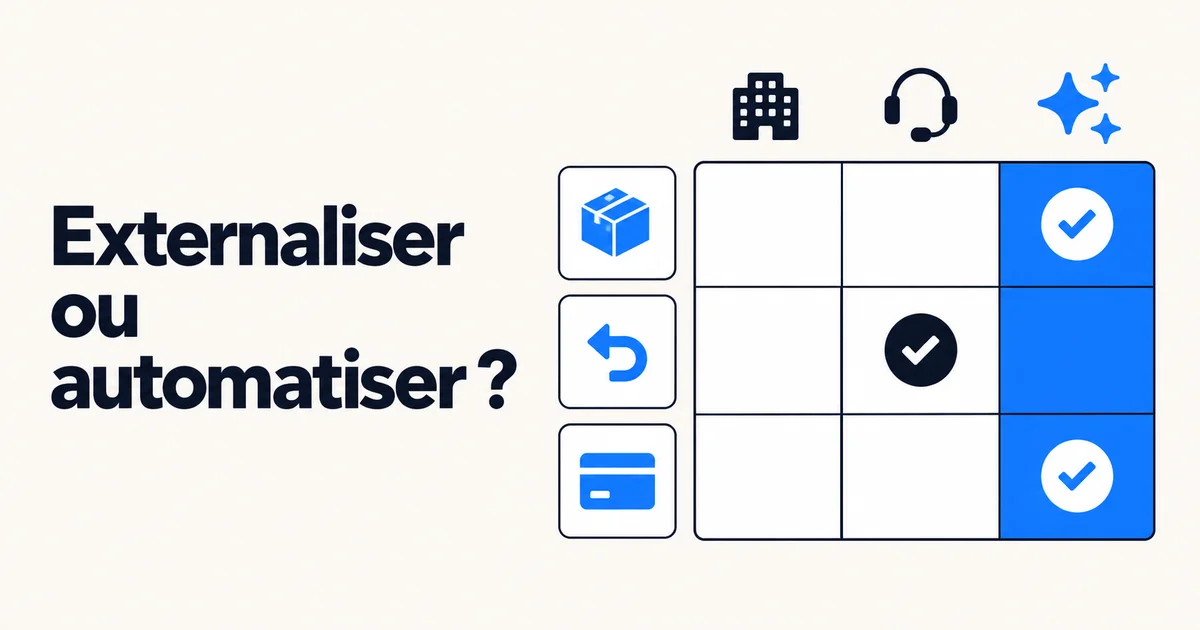
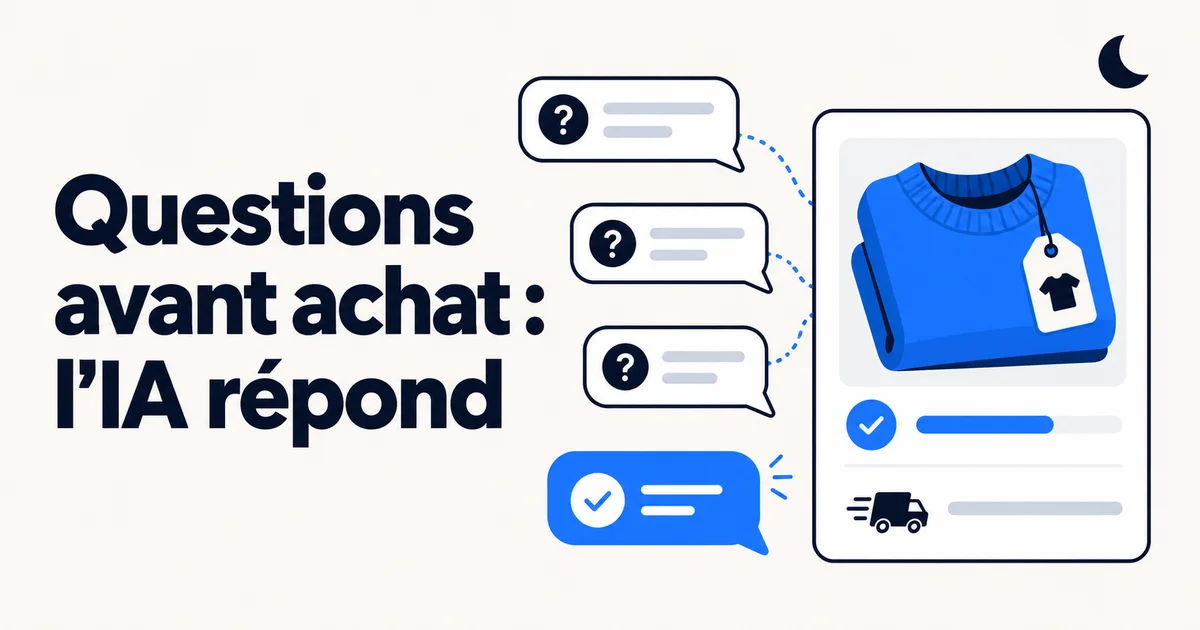
- Smart automation: AI chatbots for simple questions
- Self-service: FAQ, help center, video tutorials
- Multichannel: be where your customers are (email, chat, phone, social media)
- Proactive notifications: inform customers before they ask ("Your package is on its way!")
The Klark tip: with our customer support automation, your customers get instant answers, even at 3 a.m., without blowing up your costs.
Step 3: Personalize every interaction
Customers no longer want to be treated like numbers. They want to feel unique.
The difference between generic and personalized:
❌ Generic: "Hello, how can I help you?"
✅ Personalized: "Hi Sophie! I see you ordered our new product X last week. How can I help you today?"
How do you personalize at scale?
- Use customer history: past purchases, preferences, previous interactions
- Segment your communications: new customers vs loyal customers vs VIPs
- Adapt your tone: formal for B2B, casual for a young B2C audience
- Smart recommendations: "You liked X, you'll love Y"
- Targeted offers: promotions based on buying behavior
The role of AI: artificial intelligence lets you personalize for thousands of customers without manual effort.
Step 4: Solve problems quickly (and well)
A customer problem solved quickly = a loyal customer. A problem that drags on = a lost customer.
The golden rules:
- First contact resolution: aim for 70% minimum
- Fast response time: ideally under 1 hour for urgent cases
- Genuine empathy: "I understand your frustration" (and actually mean it)
- Proactive follow-up: get back in touch to make sure the problem is solved
- Compensation when needed: a goodwill gesture to turn a bad experience into a good one
How to improve your processes:
- Identify recurring problems and fix them at the source
- Train your agents to solve, not just to reply
- Give your agents autonomy (authority to offer goodwill gestures)
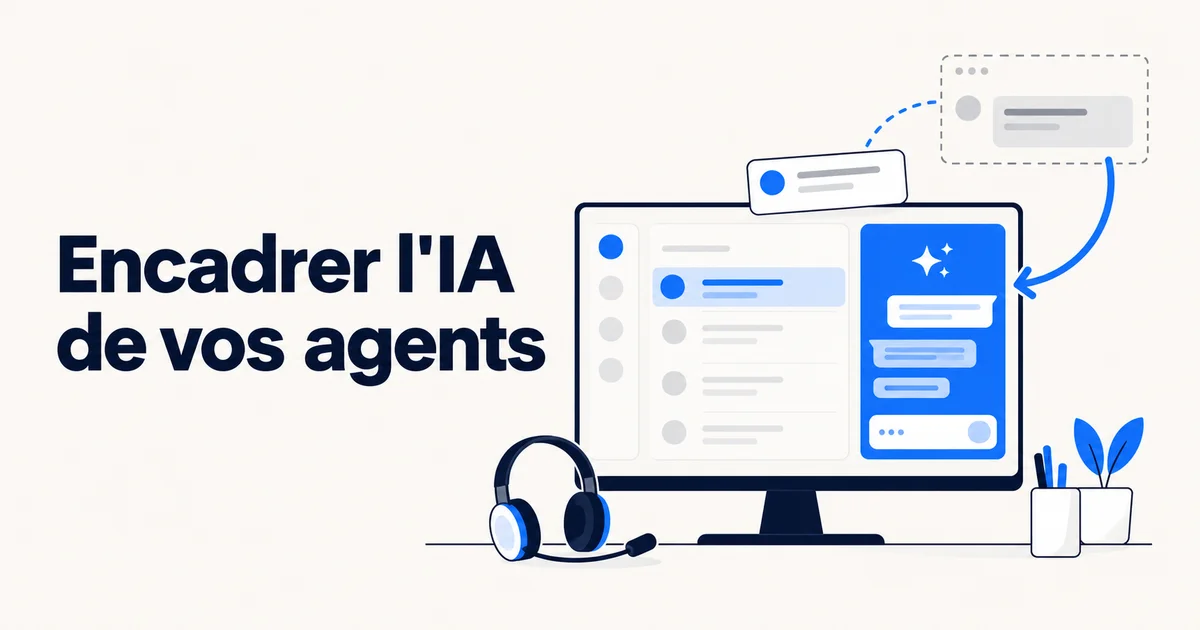
- Use AI to suggest solutions to agents (Klark Copilot)
Measure to improve:
- FCR (First Contact Resolution): % of problems solved on first contact
- Average resolution time
- Post-resolution CSAT: satisfaction after resolution
To go further, read our guide on how to measure customer satisfaction.
Step 5: Build a customer culture across the company
Customer relationships aren't just the customer service team's business. They're the WHOLE company's business.
How do you spread this culture?
- Top-down commitment: leadership has to lead by example
- Customer KPIs for everyone: even dev and marketing have goals tied to satisfaction
- Share customer feedback: every month, share feedback (good and bad) with the whole team
- Celebrate customer wins: showcase positive testimonials
- Keep training: soft skills, empathy, problem-solving
The benefits:
- Fewer silos between departments
- Customer-driven product decisions
- A more consistent customer experience
- More engaged, prouder teams
The must-have tools to optimize customer relationships
1. A high-performing CRM
Your foundation: Salesforce, Zendesk, Freshdesk, HubSpot...
What it needs to do:
- Centralize all customer data
- Track the complete interaction history
- Enable collaboration between teams
- Integrate with your other tools
2. An AI automation solution (like Klark)
To handle volume without sacrificing quality:
- AI chatbot: instant answers 24/7
- AI copilot: real-time assistance for your agents
- Email automation: smart replies to emails
- Sentiment analysis: proactive detection of at-risk customers
At Klark, we offer all of this, integrated with your existing CRM in a few hours.
3. Measurement and analytics tools
To steer your performance:
- CSAT/NPS/CES surveys: SurveyMonkey, Typeform, Qualtrics
- Analytics: Tableau, Looker, Metabase
- Voice of Customer: analysis of customer verbatims
4. An up-to-date knowledge base
To enable self-service:
- Clear, well-structured help articles
- Video tutorials
- Dynamic FAQs
- Regular updates
The mistakes that destroy customer relationships
❌ Mistake #1: Not keeping your promises
You promise delivery in 48 hours and it arrives in 5 days? It's over. The customer won't come back.
Solution: under-promise, over-deliver. Better to promise 3 days and deliver in 2 than the other way around.
❌ Mistake #2: Making the customer repeat themselves
"Can you give me your order number again? And your email? And what happened again?"
Unbearable. Your CRM should hold all the information, available instantly.
❌ Mistake #3: Replying without solving
"Thank you for your message, we have received your request." And then... silence.
A reply without a solution = worse than silence.
❌ Mistake #4: Ignoring negative feedback
An unhappy customer who tells you about it = an opportunity. Ignore them and they'll tell 10 people on social media.
Solution: respond quickly, show empathy, offer a concrete solution.
❌ Mistake #5: Thinking price is everything
"If we lower our prices, we'll keep our customers."
Wrong. 74% of customers put customer service ahead of price. A satisfied customer will happily pay more.
Measuring how well your customer relationships are optimized
The essential KPIs:
- CSAT (Customer Satisfaction Score): immediate satisfaction
- NPS (Net Promoter Score): likelihood to recommend
- CES (Customer Effort Score): ease of interaction
- Retention rate: % of customers who stay
- Churn rate: % of customers lost
- Customer Lifetime Value (CLV): total value of a customer
- First contact resolution rate (FCR)
- Average response time
To understand these metrics in detail, read our guide to the CSAT score.
The impact of AI on optimizing customer relationships
AI isn't here to replace humans, but to free them up.
What AI brings:
- Speed: instant answers, even at 3 a.m.
- Personalization at scale: every customer feels unique
- Proactivity: anticipating needs before the customer even asks
- Predictive analysis: identifying at-risk customers
- Freeing up agents: more time for complex cases and empathy
At Klark, we've seen our customers:
- Increase their productivity by 50%
- Handle 43% of tickets automatically
- Improve their CSAT by 15 points
- Cut their costs by 30-40%
To understand how, read our article on AI agents.
Real-world use case: how Click&Boat optimized its customer relationships with Klark
Context: Click&Boat, the leader in boat rentals, was facing a growing volume of customer requests.
Problems:
- Response times that were too long
- Agents overwhelmed by repetitive tasks
- Hard to scale without hiring massively
Solution: rollout of Klark (chatbot + AI copilot)
Results after 10 months:
- 43% of tickets handled automatically by Klark
- +50% productivity for human agents
- Happier agents (less repetitive work, more added value)
- More satisfied customers (faster, more accurate answers)
“Thanks to Klark, I've seen a 50% increase in my team's productivity. Right after its super-simple integration, Klark started delivering value.” — Jonathan Couverchel, VP Customer Care
Conclusion: optimizing customer relationships is a marathon, not a sprint
Optimizing customer relationships isn't a one-off project. It's an ongoing commitment that requires:
The 5 pillars:
- Really knowing your customers (data + listening)
- Being available and responsive 24/7
- Personalizing every interaction
- Solving problems quickly and well
- Building a customer culture across the company
The must-have tools:
- A high-performing CRM
- Smart AI automation (Klark)
- Measurement tools (CSAT, NPS, analytics)
- An up-to-date knowledge base
The benefits:
- More loyal customers
- Positive word of mouth
- Higher average order value
- Lower churn
- A lasting competitive advantage
Want to take your customer relationships to the next level? Request a Klark demo and see how we can transform your customer service in a few hours.
Because in the end, optimizing customer relationships means investing in your company's long-term growth. 🚀
About Klark
Klark is a generative AI platform that helps customer service agents reply faster and more accurately, without changing their tools or habits. Deployable in minutes, Klark is already used by more than 50 brands and 2,000 agents.