The phone rings. An email arrives. A message pops up on chat. A comment appears on social media. Your contact center is the nerve center where all interactions with your customers converge.
But a contact center in 2026 will no longer be a room full of agents wearing headsets. It will be a complex technological ecosystem, an agile organization, and increasingly, a collaboration between humans and artificial intelligence.
In this guide, we explain how a modern contact center works and how to optimize it.
The call center only handles phone calls. The contact center handles all communication channels: phone, email, chat, social media, instant messaging, text messages, etc.
This evolution reflects changing customer behavior. Today, a customer may start a conversation by email, continue it via chat, and finish it by phone. The contact center must ensure continuity across all these channels.
This is known as the omnichannel approach: a unified view of the customer, regardless of the channel used.
At the heart of the contact center, you will typically find:
These bricks are increasingly being unified in CCaaS (Contact Center as a Service) solutions such as Genesys, Five9, or Talkdesk.
A contact center is generally organized as follows:
Well-defined processes are essential:
A contact center is driven by data. Here are the key indicators:
Turnover in contact centers often exceeds 30% per year. Demanding working conditions, pressure to meet targets, and irregular hours make recruitment difficult.
The most successful contact centers invest in quality of life at work, training, and career development opportunities.
Each new channel (WhatsApp, Instagram DM, website chat, etc.) adds complexity. Agents must master different tools, adapt their communication to the channel, and customers expect the same quality of service everywhere.
Customers want immediate, personalized responses on the channel of their choice. The bar is raised every year, driven by the standards set by e-commerce leaders.
A contact center represents a significant cost item. The pressure to optimize is constant, but reducing resources comes at the expense of service quality and customer satisfaction.
Artificial intelligence is transforming contact centers. It is no longer a futuristic promise but an operational reality.
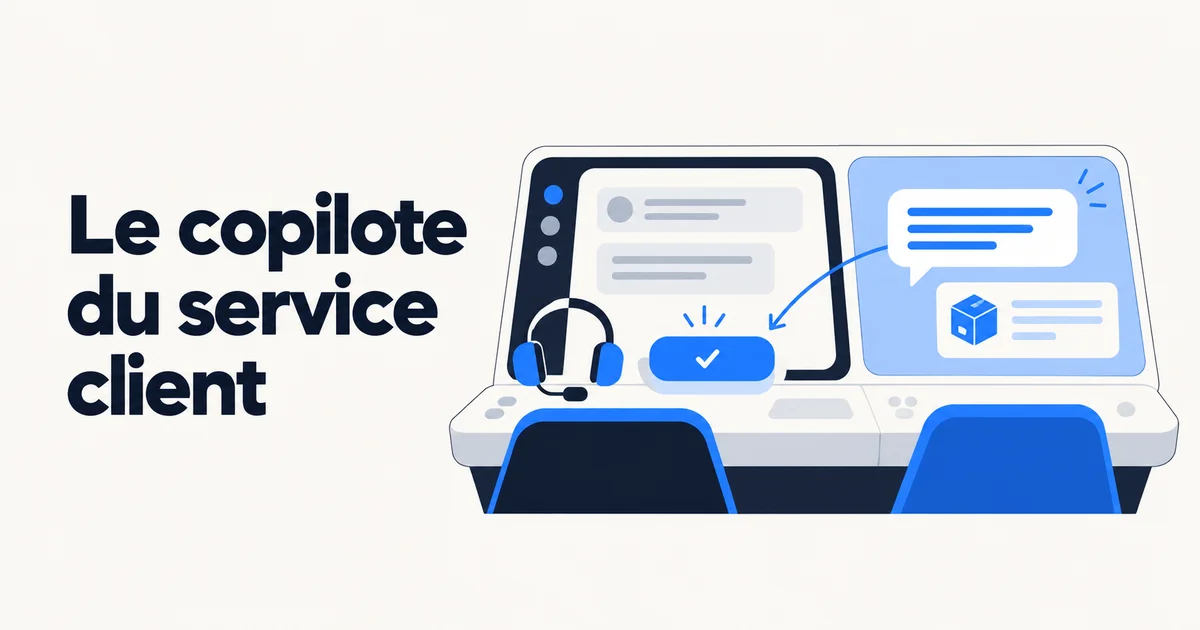
At Klark, we believe that AI should not replace agents but augment them. Our approach: AI automatically handles simple and repetitive requests, while agents focus on complex cases with high added value.
The result: agents are less overwhelmed by basic requests, their work is more interesting, and customers get faster responses.
AI is not magic. It works well in standard cases but can make mistakes in unusual situations. Human supervision remains essential.
And some customers prefer to talk to a human, especially when it comes to sensitive topics. AI should be an option, not a requirement.
The best contact is the one that doesn't happen. Not because we want to avoid the customer, but because the customer found the answer themselves, more quickly.
A well-designed knowledge base, a comprehensive self-service customer portal, and an intelligent chatbot: these investments reduce contact volume while improving satisfaction.
Every contact that requires a callback is costly: for the customer, who has to return, and for the company, which has to process the same request twice. FCR is the key performance indicator for efficiency.
To improve it: empower agents to resolve issues independently, train them on complex cases, and reduce unnecessary escalations.
Your agents are on the front line. They know what frustrates customers, which processes are absurd, and which tools are missing. Create channels for gathering this feedback and act on it.
Not everything can be automated, nor should it be. Identify repetitive tasks with low added value and automate them. Keep humans where they make a difference.
Thanks to CRM data, agents can find out who the customer is before even picking up the phone. Their history, purchases, past issues... Use this information to personalize the conversation.
What will the contact center look like in 5 years?
The contact center is much more than a cost center. It is a strategic asset that directly influences customer satisfaction, retention, and brand image.
The keys to a successful contact center:
Want to optimize your contact center with AI? Discover how Klark can help.