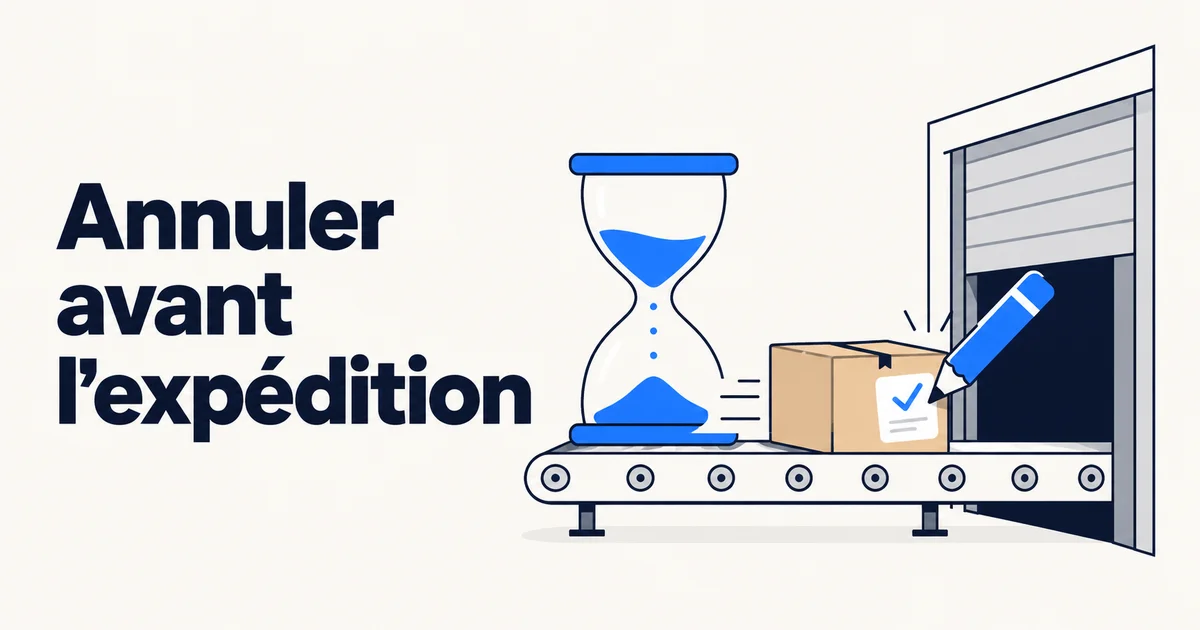
Imagine your customer service as a bathtub.
The faucet represents all the incoming traffic: tickets, recurring requests, misrouted messages, follow-ups, and noise.
The water level represents your backlog: everything the team has on its plate, everything waiting to be addressed.
Throughput is your processing capacity: what your team can handle (while maintaining the right level of quality).
When you look at a project in this way, many things become easier to understand and prioritize.
The real challenge for a customer service team isn't just that "we have too many tickets." The real issue is more specific: is the water filling the tub faster than it's draining, and is the water level staying within a manageable range for the team?
This image has an advantage. It forces us to talk about overall management, not just volume.
The goal isn’t to empty the bathtub completely: a team without a backlog is, by definition, an oversized team. Since nature abhors a vacuum, this team will tend to fill its time (see Parkinson’s Law) or, worse yet, invent meaningless problems to tackle (see Parkinson’s Law of Futility—that guy was sharp). The right goal is to maintain a useful backlog level: enough work to keep the teams busy, but not so much that it compromises quality, causes stress, or increases lead times.
Many support teams focus primarily on two metrics: the number of tickets received and response time. These are very important, but they aren't enough.
The backlog is where these two aspects come together.
If the volume gets too high, the team starts working under pressure. Deadlines get tighter. Responses become more rushed. Complex cases pile up. Agents have less bandwidth to handle, escalate, or personalize cases effectively.
If it’s consistently too low, that’s not necessarily a good thing. It means the team is overstaffed, or that its time isn’t being spent on the right areas for improvement.
A healthy backlog is therefore a managed backlog.
It is not judged solely by its absolute size. It is assessed based on the following three factors:
In other words, the backlog isn't a snapshot. It's like the water level in a dynamic system.
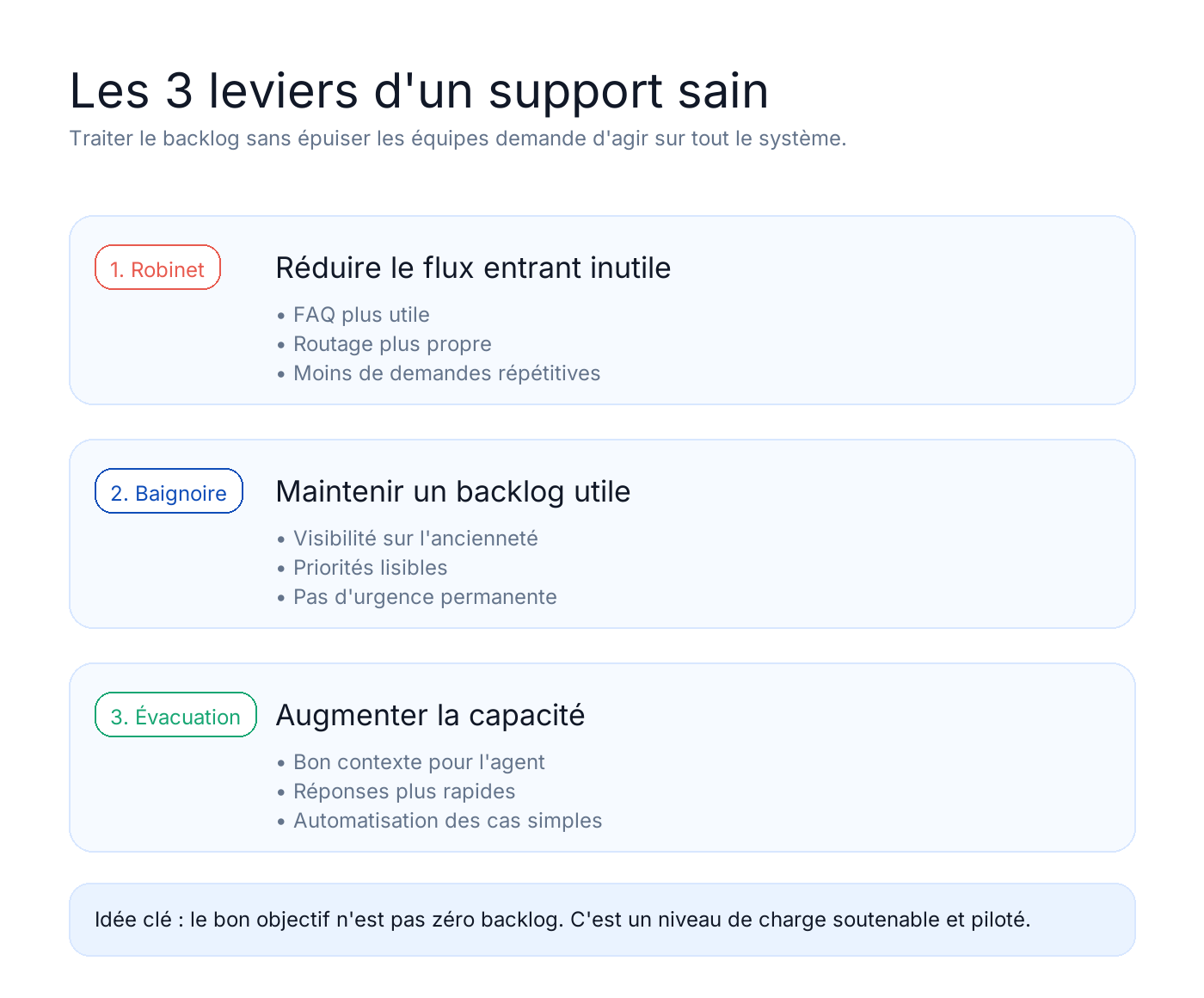
The first instinct for many teams is to try to work faster. But when the tap is running too fast, simply speeding up isn't always enough.
So the first question to ask is simple: does everything that comes in really need to come in?
In many platforms, a significant portion of the incoming traffic is actually:
Optimizing the funnel isn't just about driving traffic. It's about streamlining the process to improve the product and, ultimately, the customer experience.
In practical terms, this means:
Solutions like Klark help in two ways: by automatically responding to simple inquiries received via email and, upstream, through a chatbot that draws on a comprehensive FAQ database automatically and continuously updated by human agents.
If the faucet runs less foul-smelling water, the bath is immediately more pleasant.
The size of the backlog only makes sense when viewed in relation to the team's capacity.
A backlog of 200 tickets doesn't mean anything on its own. For a small team, it might be cause for concern. For a larger team, it might be perfectly normal.
So the right question isn't “How many tickets do we have pending?” The right question is rather:
A healthy backlog is one that keeps the team operating within a healthy workflow. In this workflow, team members aren't overwhelmed, managers maintain visibility, complex cases aren't overshadowed by simple ones, and deadlines remain manageable.
In a high-pressure environment, everything becomes more fragile. Agents resort to copy-pasting more often: priorities get blurred, escalations come too late, and misclassifications multiply. And what was once a workflow issue becomes a quality issue.
Managing the backlog, therefore, means accepting a simple idea: the right level is neither “as high as possible” nor zero. It is a level that is tailored to the team’s reality.
When the water rises, we often think of the faucet. But we also need to check the drain.
The workload capacity of a support team depends on several factors:
Of course, we can hire new staff. That’s the easiest and quickest solution. But before doing that, there’s often plenty of room for improvement in how our current staff work.
A team works faster when it doesn't have to:
This is where Klark’s co-pilot really shines: Klark helps increase processing capacity by providing agents with the right context more quickly, offering context-specific responses, and handling some of the repetitive cases when the conditions are right.
The benefits don’t come from a single magic button. They come from a better-organized workflow (if this topic interests you, you might also want to revisit our article on agent-based AI for customer service, which shows how human assistance and automation can coexist without compromising quality).
When a backlog gets out of hand, the most common reaction is to ask the team to do more. Faster. Harder. Longer.
That's understandable. But it's often the worst way to deal with the problem, especially when it happens frequently.
Why? Because it only affects the end of the system and wears down people's goodwill.
If the tap is left wide open, if the backlog is poorly structured, and if processing capacity remains hampered by a lack of context or by repetition, then we are effectively asking the team to clean up the mess created by a poorly managed or poorly scaled system. This approach wears down team members, makes lead times more volatile, and obscures the real opportunities for improvement.
A good support team must not only work hard; it must also operate within a system that allows it to keep things under control.
The value of the bathtub metaphor is that it also helps us understand where a platform like Klark creates value.
Klark helps reduce unnecessary incoming traffic by automating certain simple cases—either downstream via email or upstream via the chatbot.
With its automated audits, Klark helps you understand your backlog by automatically identifying the most common categories, tracking how they evolve, and—most importantly—automatically pinpointing new workflows that can be automated.
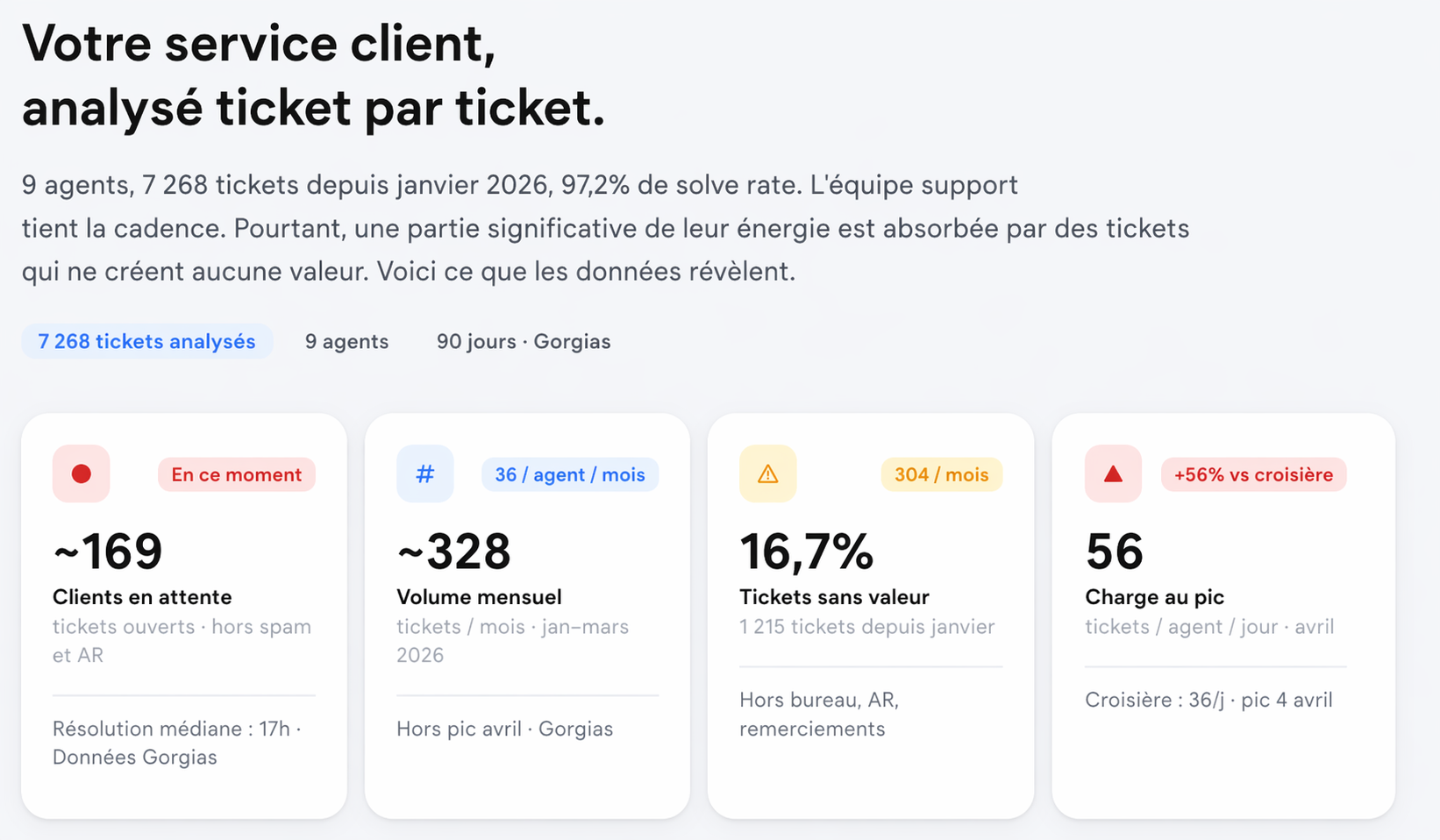
Klark boosts processing capacity by providing the right context in the right place, generating drafts or context-specific responses, handing control back to humans when necessary, and enabling gradual, continuously improving automation.
For further reading with a focus on architecture, you may also want to check out our article on Agentic RAG for customer service.
Managing customer service is like steering a bathtub.
You need to check the faucet, the water level, and the drain.

Teams that focus solely on response time often see the symptom, not the whole system (the bathtub, its faucet, and its drain, if you’re following along). The strongest teams address all three levers at once: they reduce unnecessary incoming work, keep their backlog within a healthy range, and increase their processing capacity without compromising quality.
The goal isn't to empty the bathtub at all costs. The goal is to maintain a workload that keeps the team performing at a high level without burning them out: it's a marathon, not a sprint!
When you look at the situation this way, you finally start taking control instead of just going along with it.
About Klark
Klark is a generative AI platform that helps customer service agents respond faster, more accurately, without changing their tools or habits. Deployable in minutes, Klark is already used by over 50 brands and 2,000 agents.